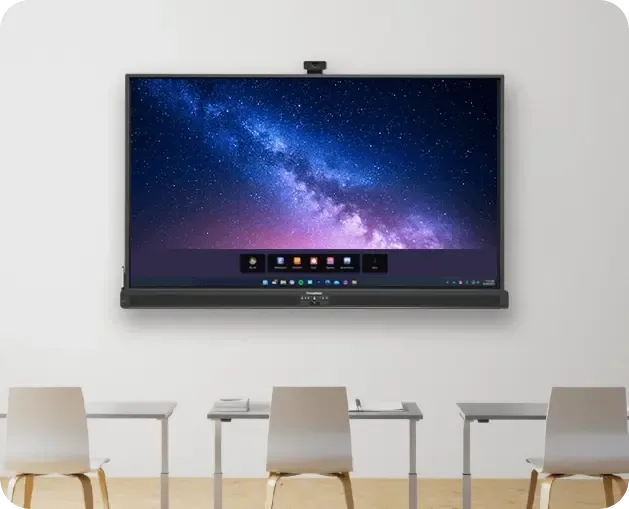
Every year, NZ schools complete new buildings and major renovations and move in to find the AV does not quite work the way they needed it to. The screens are in the wrong place. The cabling is chased into walls that are now plastered over, meaning any changes are expensive. The power points are not where the panels need them. The classroom acoustic design did not account for sound reinforcement. All of it fixable in hindsight, none of it fixable cheaply.
This is almost never the school's fault. It is usually the result of AV being treated as a loose-furniture item rather than a building system: something to be sorted after the builders are done, rather than designed in from the start. This article is about how to avoid that.
Why AV is almost always planned too late
School building projects in NZ are typically led by architects and project managers working within Ministry of Education (MOE) funding guidelines. The design process focuses heavily on building fabric, space layout, acoustic ratings, and compliance. AV is often bundled into a late-stage "fit-out" category, specified by the school itself rather than the design team, and procured separately from the building contract.
The problem is that several AV requirements are not late-stage decisions. They are structural and electrical decisions that need to be locked in when the building is being designed. By the time the school is ready to think about screens and panels, those decisions have already been made: correctly or not.
The result is a pattern Edtex sees regularly: schools with beautifully designed new learning environments where the electrical engineer put power in the wrong locations, where the structural engineer did not allow for wall-mount loading, where the acoustic consultant optimised for speech intelligibility but nobody specified a sound system to match it, and where the IT contractor ran network cable to the wrong rooms.
When to bring in an AV advisor
Ideally, at concept design stage, before the architects have finalised room layouts. This is when AV requirements can genuinely influence the design. Panel position, speaker location, acoustic treatment, and cable routing are all much easier to get right when the building is still on paper.
Practically, most schools engage AV advice at schematic or detailed design stage. This is still early enough to influence electrical drawings, structural provisions, and data cabling routes. It is too late to shift walls, but it is early enough to avoid the most expensive mistakes.
What you should not do is wait until the building is near completion and then ask an AV supplier to quote on fitting out the rooms. At that point you are constrained by every decision that has already been made, and you are paying a premium to work around them.
David's take
Before founding Edtex, I worked at Network for Learning (N4L), the Crown-owned company responsible for managed broadband and digital connectivity in NZ schools. From that role I saw exactly how technology infrastructure decisions play out across school building projects nationally. The schools that got it right had a technology advisor in the room during design. The schools that did not got connectivity and AV retrofitted at significant cost. The gap between those two outcomes is almost entirely about timing.
The infrastructure decisions that happen at construction stage
These are the decisions that need to be made while the building is being built: not after.
Electrical provisions. Interactive panels require a dedicated double power point, ideally flush-mounted in the wall at the correct height for the panel. Digital signage screens and projectors have their own power requirements. Every screen location needs electrical provisions planned and installed at fit-out stage. Adding power points after plastering is expensive and disruptive.
Structural wall backing. An 86-inch interactive panel weighs between 60 and 90 kilograms and must be mounted on a wall capable of supporting it safely. Most standard timber or steel stud walls need blocking or backing plates installed during construction. This is a 30-minute task during the build and a significant structural job after.
Data cabling. Every AV location needs network connectivity. For panels, this means at least one Cat6 data point at panel height. For digital signage, at least one data point at screen height. These are installed by the data cabling contractor during construction and need to be on the cabling schedule before they are on site.
Conduit for HDMI and AV signal runs. If rooms will have a presenter position away from the panel (a teacher's desk, a lectern in a hall), you need conduit run from the panel location to that position. Running cable through walls and ceiling spaces after the building is complete is the most common source of unexpected cost in school AV retrofits.
Acoustic design. New Learning Environments (NLE) and open-plan spaces are particularly sensitive to this. A well-designed acoustic environment supports speech intelligibility without electronic reinforcement. A poorly designed one requires a sound system that then needs to be installed, cabled, and integrated. The acoustic consultant and the AV advisor need to talk to each other during design.
Projector and screen structural provisions. For halls and large spaces, ceiling-mounted projectors and motorised screens require structural attachment points and conduit for power and signal. These are specified on structural drawings and need to be in the building contract.
What to include in your AV brief
When engaging your architect or project manager on a new build or renovation, the following should be in the AV brief from the start:
- Number of teaching spaces and the AV specification for each (panel size, audio, connectivity)
- Administration and meeting spaces requiring displays or video conferencing
- Hall and assembly space requirements (projector and screen or large-format display)
- Digital signage locations and content management approach
- Outdoor display requirements if applicable
- Network and IT infrastructure requirements that interface with AV
- Acoustic performance targets for teaching spaces and how AV reinforcement will be provided
- Future-proofing requirements (conduit, spare data points, spare power)
This brief should be developed in consultation with the principal, the HOD Technology or ICT lead, and an independent AV advisor.
The most common mistakes
From working in NZ school technology at a national level and from years of AV installations across Auckland, Northland, and Waikato, the same mistakes appear consistently:
- Specifying equipment before the room is designed. Panel sizes, throw distances, and speaker positions all depend on room dimensions. Get the room right first.
- Treating AV as furniture rather than building services. AV belongs in the building contract scope for infrastructure and in the fit-out scope for equipment. Combining them or separating them wrongly creates gaps.
- No spare capacity. Run conduit to every room even if you are not fitting equipment in all of them immediately. Retrofitting conduit later is disproportionately expensive relative to including it during the build.
- Forgetting the hall. Classroom AV gets most of the attention, but the school hall typically serves the largest audiences and has the most complex AV requirements. It should be in the brief from day one.
- Not involving teachers. The people who will use the rooms every day should have input on the AV specification. This does not mean asking teachers to spec equipment, but it does mean asking them what they need to teach effectively and designing to that.
- Lowest-price procurement without a quality specification. The cheapest quote is rarely the best outcome. A detailed specification prevents this problem by making quality non-negotiable rather than optional.